

Happy Thanksgiving from 2020 Music Group. Issue nine contains recommendations of two NY musical experiences, a visit with early American musical modernism and a reflection on the aesthetics of rigor and leisure in Jazz.
Recommendation: Beta Librae playing ‘Til Tuesday’s “Voices Carry” at Kismet
This past Friday I went with my friend Rachel to see the Bruce Springsteen Nebraska biopic at MoMA. I am not a huge fan of Springsteen’s but I love that album. The film featured a couple interesting treatments of the record’s technical construction, and a scene depicting Jeremy Allen White laying on the floor listening to Suicide’s “Frankie Teardrop.” Springsteen was a surprise guest at the subsequent panel discussion, alongside his longtime manager and the film’s director. The screening took place in the museum’s Roy and Niuta Titus Theater 1. It’s a beautiful room, projecting a controlled sense of open space through stark, simplified geometric forms. The shadowplay created by the recessed waves running along the ceiling is especially nice. It was kind of weird that Bruce Springsteen was there, but it was interesting to be in the same room as him.
Rachel suggested we go to an ambient show in a Greenpoint basement afterwards so we took the train over. We descended a narrow set of stairs, made our way through two doorways, and took a moment to adjust to the environment. It was red and purple with columns and pillows, and the ceiling was low. We sat on the floor. There was a digital meter measuring the decibels emanating from the pyramid-shaped speakers. I used to see DJs frequently but it has become a rarer intentional occasion in recent years – I forget what it’s really like sometimes. The music was somewhat downtempo, immersive, and heavy on gravitational negative space. When a gestural synth lead entered the mix, you actually noticed the ways its timbre pushed and pulled. Beta Librae played this beautiful ‘Til Tuesday song in the middle of her set and the rushing images and spaces and feelings from the last few hours became sharper, more lucid. This was a patient engagement with the dialectic of form and formlessness. Aimee Mann’s voice and story focused the ear’s aperture for a few minutes, constructing a focal point that suddenly appeared in an interlaced structure with everything on either side of it, and then things opened up again.
—Alexander Iadarola
Recommendation: Charles Ives, Piano Sonata No. 2 (Concord Sonata)
A couple of weeks ago, after playing some tennis with Jeff Witscher and Daren Ho in Harlem, we swung by the American Academy of Arts & Letters to visit their recreation of Charles Ives’ Redding, CT home studio. Jeff made an appointment and upon arrival we were escorted by a friendly security guard through some back corridors to arrive at a small gallery, which contained the even smaller replica of The Great Man’s office. Peering over a velvet rope into the dimly lit setting, we attendees were invited to view such things as Ives’ hat. Around the short gallery hall, featuring photos, scores and sketches, another view was available of the piano and a copy of Ive’s First Sonata for piano. I’ve seen photos of this exhibit before, and it was cool to see first hand. Some interesting quotes were printed boldly on the wall: e.g. “Sent some copies out of 114 Songs – gives offense to several musical pussies.” (Charles Ives diary entry, April 1923). Really, there wasn’t all that much to see, which only enhanced the hilarious pomp of the appointment protocol, and security escort to stand around in a closet of Ives’ ephemera.
It caused me to think about a sort of discrepancy between the availability of this experience, the ever increasing performances and recordings of his music and the relative lack of interest in what his music is and does. Even in the long duration of his own lifetime, he was considered by all but a few contemporaries (like Schönberg) to be a strange iconoclast – out of step with both the new emergent American musical canon and with the European avant-garde (with which a large part of his work shares expressionist features of cacophony, polytonality, modernist literary reference, and so on).
As the modest museum collection suggests, Ives is celebrated; but from my vantage point as a lifelong participant in both classical music institutions and iconoclastic American music, it feels like Ives was in some way the first and last - the only - member in a class of composers to be “re-discovered” on his way to a lifeless archive. My purpose in revisiting his legacy here, is to recommend that it still has a lot to offer, and that in a way it has been made somewhat culturally inaccessible by its domestication in the “classical” canon. Too old and idiomatic to be a part of the Cagean paradigm’s long life into the practices of 21st century experimentalism; too “American” and deranged to really fit neatly within the conceptual disciplines of European modernism and the accompanying compositional pedagogy that persists still in conservatories.
This is a pretty standard take for anyone that studies or simply enjoys Ives. But as I alluded to in my writing last week about Screamo and a sort of musical “stridency,” my recommendation is not simply for people-who-like-Ives to listen to him more, but is for those who haven’t listened to him, or who have, but didn’t enjoy or feel as if they understood it, to look at it more closely. My Dad emailed me two Ives quotes, which I wish I had included last week, but am glad to share now:
“Beauty in music is too often confused with something that lets the ear lie back in an easy chair. Many sounds that we are used to do not bother us, and for that reason we are inclined to call them beautiful. Frequently—possibly almost invariably—analytical and impersonal tests will show that when a new or unfamiliar work is accepted as beautiful on its first hearing, its fundamental quality is one that tends to put the mind to sleep.”
“The word ‘beauty’ is as easy to use as the word ‘degenerate.’ Both come in handy when one does or does not agree with you.”
As a young aspiring composer, I studied Ives’ Piano Sonata No. 2, commonly known as the Concord Sonata (published in 1920, but developed over the course of the previous 15 or so years). The piece is built on formal references to Beethoven’s Fifth Symphony, with movements titled after American transcendentalist writers, and is composed of highly cacophonous passages interspersed with intense melodic development and some of the earliest instances of full chromatic cluster chords. After leaving the Arts & Letters exhibit, Daren and I listened to the piece on the way back into Brooklyn. Cruising down 3rd avenue in the brutal evening traffic, absorbing the lights of pub windows, the art deco facades, the honking and weaving of delivery drivers and angry commuters, I felt represented by the crazed lyricism of the solo piano – degenerate, beautiful: easy.
—Alec Sturgis
Recommendation: The Music of Bill Evans
I’m in Los Angeles right now and thinking about New York City. It’s usually like this whenever I’m out here. Talking with people, there’s a tacit curiosity that invites conversational contemplation and comparisons between the two cities. LA and NYC are extremely different—with unique issues—but I also appreciate hearing how people are navigating contemporary life within their distinct contours. The differential ratio between these two lifestyles of urban America seems to be enthralling to people, bounded by a sheer commitment to live in such cities. It’s also nice to understand that I have my own problems, and by extension my own city’s problems, and that many of LA’s problems are not mine. I was in a health food store in Los Feliz the other day looking around at all the bizarre offerings and felt a sense of peace thinking “this shit is none of my business.” Regardless, it’s been nice to drive around visiting various strip malls and neighborhoods in the good LA weather.
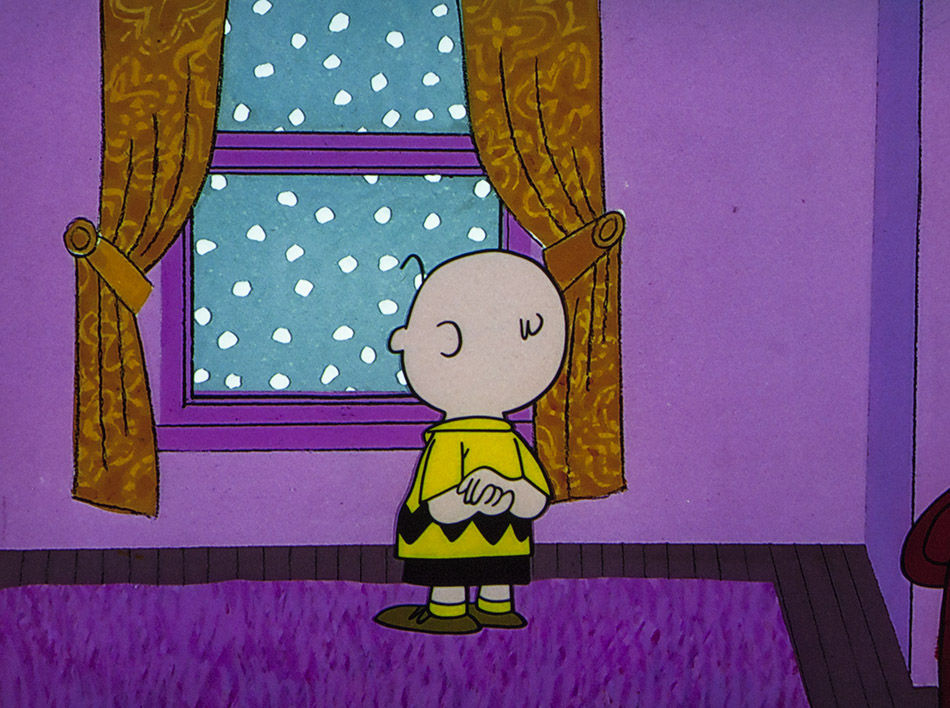
I’ve been listening to American jazz pianist Bill Evans the entire time I’ve been out here. I picked up his biography Bill Evans: How My Heart Sings at Vroman’s bookstore in Pasadena and have been thumbing through the pages this week. I’ve had his music on autoplay, playing out of my pocketed phone, or various Bluetooth speakers, as I’m hanging out with family. Bill Evans is perfect Thanksgiving week music—on some Charlie Brown shit—the kind of music that coffee shops, bookstores, boutiques, etc. play to invite an ambient comfort that this holiday corridor insists upon. Admittedly, I’ve not been paying close attention to the details of particular recordings or albums by Evans. In 2025, his music often asserts itself as “for the vibes,” in the way that a lot of modal, cool jazz has been established within the paradigm of easy listening and overall “feel good” music. The sound affirms a gestalt of affability and positivity; but, the coziness enshrouds its absolute rigor of practice and performance. Throughout, I’m baited into the relaxing “soundscape” of jazz but then quickly pitted into the intense cognitive labor of actually listening to the music. The way Evans reinterprets standards, reharmonizing and uncovering melodic possibilities—quartal voicings, counterpoint in the southpaw piano hand, his various classical influences (Ravel, Debussy, Stravinsky) finding their way into floating time and long-line improvisation. Keying into the music, I’m sitting on the couch behaving like the recently viral polyphonic perception TikTok video—”can you believe the notes as well as the space between the notes!” I think comfort’s descent into rigorous reflection is a unique feeling the holidays can provide us.
It’s also a time to reflect upon your life. Flipping through Bill’s biography, it’s cool to read about his personal trajectory into becoming a jazz legend. Born in New Jersey, Evans eventually studied classical music at Southeastern Louisiana College and then the Mannes School of Music, in New York City, majoring in composition. Before jazz, he was a wedding pianist in Jersey performing polka music for $1 an hour, or Beethoven at Tuxedo clubs, was a founding member of a Delta Omega chapter of Phi Mu Alpha Sinfonia (a fraternity dedicated to music) in Louisiana, played quarterback on the football team, and was drafted into the army for three years, where he played flute in the company band. He then moved back to New York City to subsequently work with bandleader and theorist George Russell (author of Lydian Chromatic Concept of Tonal Organization), played with Mingus, Monk, and virtually every other major name in NYC jazz, and then released his first solo recording—entitled New Jazz Conceptions—great title. It was a commercial failure, but then in 1958, Evans joined Miles Davis’s sextet and recorded Kind of Blue, the best-selling jazz album of all time. This is the kind of personal history that really only exists in that particular era of the 20th century—and one that led to his ultimate jazz epithet, Everybody Digs Bill Evans, also the title of his next solo record released in 1959. Emblazoned on the LP sleeve are various tribute quotes, one from Miles Davis: “He plays the piano the way it should be played.”
Anyway, this is the kind of stuff I end up thinking about and listening to whenever I’m in Los Angeles. There’s something about the city that kind of pulls out this composerly excellence factor (there’s the classic photo of an expat Schönberg watering his Brentwood lawn in the 1940s)—a psychogeography where genius and relaxation coexist after some insane arc in Europe or New York City. While I’ve been out here, I visited an antique store that contained stunning prints of Warhol and Man Ray, an expertly designed Devo concert poster live at Irving Plaza, and some framed original posters of an Abercrombie advertisement and of the film Anchorman—all pretty exacting stuff that was inspiring to see amidst all the midcentury furniture for sale.
Contemplating the rigor and leisure of the city, I’m hoping I can model some kind of balance between the two when I’m back—taking in a contemplative mood dredged up by the holiday and this kind of NYC<>LA dialectic. I’ll probably keep the coffee shop glow and intense discipline of Bill Evans’ music playing as I walk through the last of the New York autumn leaves.
—Nick James Scavo